 0


 English
 Français
 Español
Yiwu Sloggi Cosmetics Co., Ltd.
Over the past couple of years, the global men's grooming market has continued to expand, and more emerging brands and independent-site sellers have turned their attention to the perfume for men category, hoping that a distinctive scent profile can help them stand out in overseas markets. Yet compared with the attention on the consumer side, what happens further up the supply chain deserves just as much consideration. Turning a fragrance formula into a finished, market-ready product depends heavily on a manufacturer with solid technical experience. Many brand teams that have gone through supplier sourcing recognize that choosing a capable Perfume Body Spray Factory can have a significant influence on the final product, sometimes even beyond packaging decisions alone. This is why supplier selection has become an increasingly important topic for brands developing men's fragrance products for international markets.
How Is Segmented Consumer Demand Reshaping Upstream Production?
Today's male fragrance consumers rarely settle for a single scent type. Daily commuting, workouts, business occasions, and evening social activities can each call for a different olfactory profile, and this fragmented demand is felt directly at the manufacturing level. Brands increasingly need efficient sampling, a broader scent-note library, and production flexibility that can accommodate different product concepts and customized batches.
A supply model built purely around price is gradually becoming less practical for brands that want to establish a differentiated fragrance line. Manufacturers that can contribute formulation ideas, understand fragrance positioning, and work closely with brands on product details are becoming more relevant to overseas buyers. Instead of simply selecting a ready-made product, brands can work with a manufacturer to refine the fragrance direction according to their target market, product positioning, and intended sales channel.
For manufacturers, this shift also creates higher expectations. They need to respond to changing fragrance preferences while maintaining practical production capabilities. A flexible development process can help brands move from an initial fragrance concept to sampling and eventually to commercial production without making every stage unnecessarily complicated.
Why Does Scent Structure Reflect a Manufacturer's Formulation Experience?
A well-composed men's fragrance typically develops through top, middle, and base notes, and this layered structure is not simply a matter of combining ingredients. It requires a formulation team to evaluate how different components interact and how the fragrance changes over time. The top note shapes the impression, the heart note carries the main character of the composition, and the base note provides the final foundation that remains after the earlier notes gradually fade.
For a manufacturer, developing this structure requires repeated testing and adjustment. Different aromatic materials can influence one another, and the final result needs to remain coherent rather than allowing individual notes to compete. This is particularly important for brands that want a recognizable fragrance identity instead of a generic scent profile.
Whether this layered character can be reproduced consistently across production batches also says a great deal about a factory's formulation management and process control. For overseas buyers, this is often one of the areas worth examining before entering a long-term supplier relationship.
What Can OEM and ODM Partnerships Offer Brands Going Abroad?
Rather than building their own production lines, more brands expanding into overseas markets are choosing to work with established manufacturers through OEM or ODM arrangements. This approach can reduce the complexity of setting up fragrance production internally while giving brands access to existing formulation experience, manufacturing equipment, and product development resources.
For brands developing new men's fragrance products, an established manufacturer may provide several practical advantages:
- Access to an existing fragrance library for more efficient sampling and product development
- Flexible formulation adjustments based on brand positioning and target market preferences
- Support for different product formats, packaging requirements, and market applications
- A more efficient path from an initial fragrance concept to a finished commercial product
This type of cooperation also raises the expectations placed on manufacturers. A capable supplier needs more than a selection of existing formulas. The manufacturer should also be able to communicate clearly with brand teams, understand specific requirements, and make reasonable adjustments during the sampling process. For overseas businesses, transparent communication can be especially valuable when development teams and production facilities are located in different countries.
How Does Supply Chain Management Support Consistent Production?
Fragrance products can be sensitive to variations in raw materials, formulation processes, and production conditions. Even relatively small differences between batches may become noticeable when a product has an established scent profile. For this reason, standardized quality management needs to cover more than the final filled bottle.
Important areas of manufacturing control can include:
- Raw material sourcing and incoming material checks
- Fragrance formulation ratios and batch records
- Filling and production process control
- Batch-to-batch fragrance consistency
- Production scheduling and lead-time management
Manufacturers with an organized supply chain can better coordinate these stages while balancing production requirements and delivery schedules. For brands, this behind-the-scenes capability can be more important than it initially appears. A fragrance may perform well during the sampling stage, but maintaining a consistent product when repeat orders begin is a different manufacturing challenge.
Long-term buyers therefore tend to look beyond the sample. They may also consider how the supplier documents production, manages materials, communicates changes, and maintains consistency across subsequent orders. These details can provide a more practical view of manufacturing capability than an initial quotation alone.
How Is Sloggi Developing Its Fragrance and Production Capabilities?
As a manufacturer with experience in men's body spray and fragrance production, Sloggi has focused on areas such as raw material selection, fragrance development, scent-note combinations, and production processes. The development process considers the fragrance characteristics required by different overseas markets, while communication with partner brands during sampling helps clarify product direction and technical requirements.
Different international markets can have different preferences regarding freshness, sweetness, spice, woodiness, and overall fragrance intensity. Rather than treating one fragrance profile as suitable for every market, manufacturers can work with brands to refine the product concept according to the intended audience and sales environment.
Sloggi also works with partner brands during the sampling stage to review fragrance details and product requirements. This collaborative process allows both sides to discuss adjustments before moving toward larger-scale production. For brands developing their own men's fragrance collections, such communication can make the transition from concept development to manufacturing more manageable.
What Does a Woody-Aromatic Fragrance Direction Look Like?
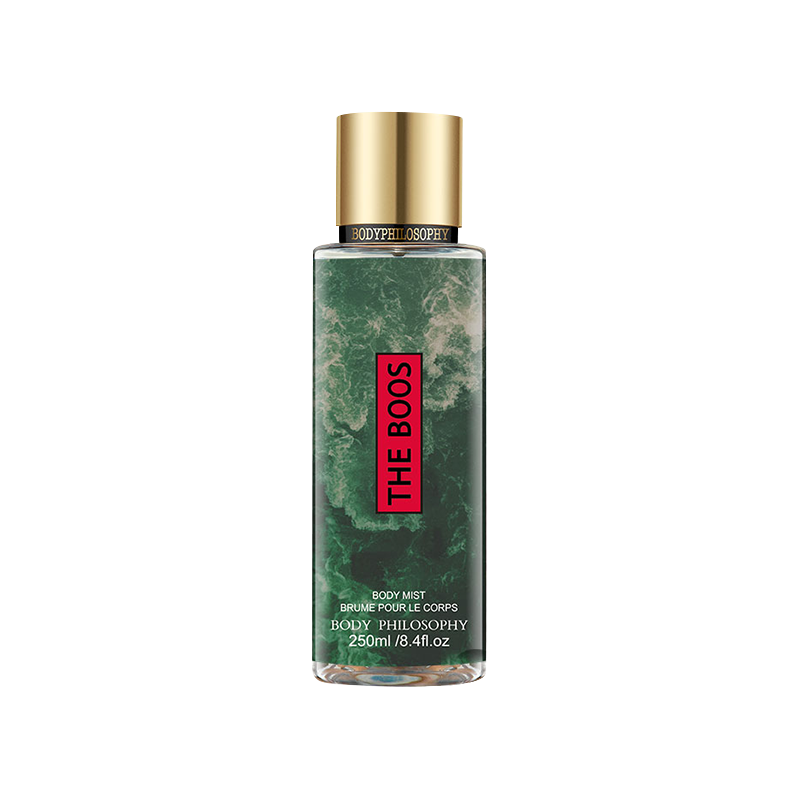
Sloggi's B0015-BD-15 The Boos Woody Men Body Mist provides an example of how a layered fragrance can be developed around a woody-aromatic direction. Rather than relying on a single dominant note, the composition progresses through several stages, allowing fresh, floral, green, and woody elements to contribute to the overall scent profile.
The fragrance structure can be viewed through three main stages:
- Top notes: Fresh rue, blood orange, and an ozonic accord create a crisp opening inspired by the atmosphere of fresh air after rain in a forest.
- Heart notes: Mint, orris root, apple, lily of the valley, and cantaloupe create a cooler and slightly sweet middle stage with floral and fruity nuances.
- Base notes: Vetiver, patchouli, cashmere wood, amber wood, and coumarin provide a warmer and more grounded foundation for the fragrance.
This type of layered formulation provides a practical reference for brands during fragrance development. When a partner brand is working through custom sampling, discussing each stage of the fragrance can make it easier to identify which elements should be emphasized, softened, or adjusted according to the intended market position.
For overseas buyers, the example also demonstrates why fragrance development should be viewed as a structured process rather than simply selecting individual ingredients. The interaction between the opening, heart, and base ultimately determines how the product is experienced over time.
What Should Brands Check When Evaluating an Overseas Manufacturer?
Brands looking for a men's fragrance manufacturing partner may want to consider several practical factors before making a supplier decision. Price remains relevant, but it should be evaluated alongside formulation capability, production consistency, customization flexibility, and the manufacturer's ability to support future orders.
- Fragrance library: Does the manufacturer have existing scent options that can support efficient sampling and product development?
- Formulation capability: Can the factory adjust fragrance profiles according to the brand's positioning and target market?
- Quality traceability: Are formulation, raw material, and production records properly documented?
- Production consistency: Can different production batches maintain a similar fragrance profile and product specification?
- Customization flexibility: Can the manufacturer respond to specific requirements instead of offering only standardized products?
- Long-term supply capability: Can the supplier support repeat orders and future product development as the brand grows?
These considerations can help procurement teams build a more complete picture of a potential supplier. A manufacturer may have an attractive product catalog, but the ability to communicate during development, maintain consistent production, and respond to changing requirements can be equally important once a brand moves beyond the initial sampling stage.
Looking at the broader picture, competition in the men's fragrance category is gradually extending beyond retail marketing toward manufacturing capability further upstream. Manufacturers that can combine thoughtful scent development with dependable production processes are better positioned to become long-term partners for brands entering international markets. For overseas buyers building a perfume for men product line, partnering with a manufacturer such as a Perfume Body Spray Factory that combines formulation experience, product development support, and flexible production can be an important factor in bringing new products to market while maintaining a consistent brand direction over time.